
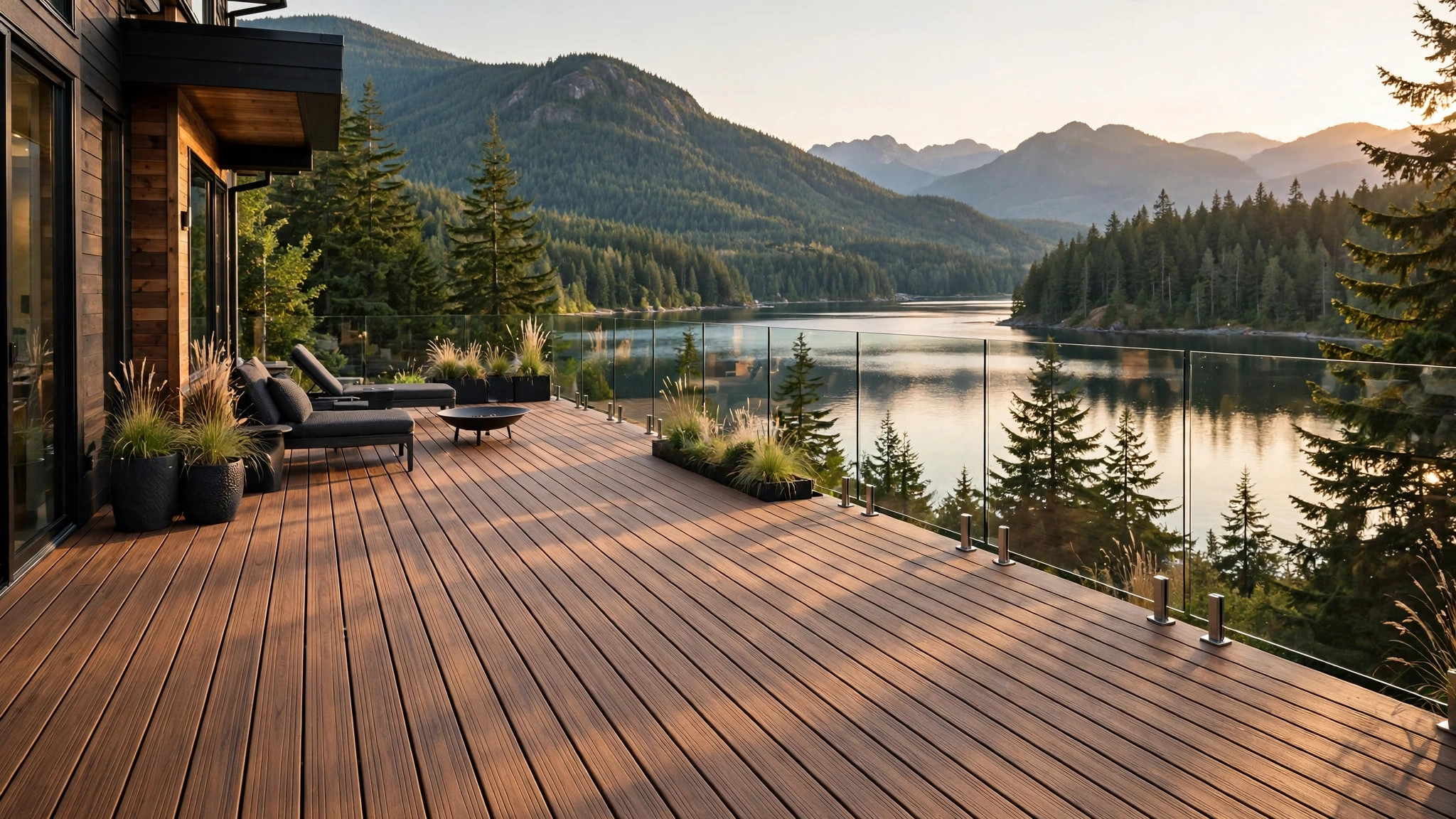
TimberTech vs AZEK: A Composite Decking Buyer's Guide
TimberTech and AZEK are the two names every composite-decking shopper hears first — and it confuses almost everyone, because they're made by the same company. Here's the clear version: what each line is, how they differ, and which one belongs on your BC deck.
The Family Tree, In One Paragraph
Both brands are made by The AZEK Company. AZEK decking is the premium, capped-polymer (PVC) line. TimberTech is the capped-composite line (wood fibre blended with polymer), offered in PRO and EDGE tiers at progressively friendlier prices. Same parent, different materials, different price points — think of them as good, better, and best within one family.
The Material Difference: Capped Polymer vs Capped Composite
This is the key distinction, so it's worth understanding:
- AZEK (capped polymer/PVC): a polymer core fully wrapped in a protective cap. No wood fibre at all, which means it absorbs virtually no moisture. It's the top choice for poolside decks, lakefront docks, and coastal BC builds that live in rain and spray.
- TimberTech PRO (capped composite): a composite core of recycled wood fibre and polymer, wrapped in a polymer cap. Excellent performance, real-wood texture, and roughly 20–30% less expensive than AZEK.
- TimberTech EDGE (capped composite, scalloped): a scalloped-profile core that cuts weight and cost while keeping the capped composite cap. The entry ticket into the family — the look of premium composite at a price closer to a top-end cedar build.
In practice, all three are miles ahead of first-generation uncapped composite (which stained, faded, and mildewed — the stuff that gave composite its early bad reputation). The cap is what makes modern boards work.
The Collections, Compared
AZEK: Vintage and Harvest
AZEK's Vintage Collection is the flagship — the most realistic wood grain in the industry, deep colours, and the best fade and stain protection in the business. The Harvest Collection is AZEK's more accessible line: classic colours, the same capped-polymer core technology, at a lower price point. If you want the closest thing to exotic hardwood looks with zero wood, AZEK Vintage is it.
TimberTech PRO: Legacy, Reserve, and Terrain
Legacy is the premium composite collection — hand-scraped grain patterns, rich variegated colours. Reserve adds distinctive cathedral grain for a reclaimed-wood look. Terrain is the workhorse: warm, natural tones at the collection's best price. PRO boards carry strong fade and stain warranties, and the Terrain+ line offers multi-width options for picture-frame borders and feature strips.
TimberTech EDGE: Prime+ and Prime
EDGE Prime+ and Prime deliver the capped-composite look and low maintenance at the family's most affordable prices. Colour range is narrower and the grain subtler than PRO and AZEK, but for a budget-conscious build — or a large deck where every dollar per board multiplies — EDGE is a compelling option.
Warranties: Covered by the Manufacturer
Every collection is covered by the manufacturer's warranty — TimberTech/AZEK publish the full warranty terms, and warranty claims and questions go directly to them. Use the manufacturer's fastener system (Cortex colour-matched screws, CONCEALoc hidden clips) and follow their installation guidelines — deviating can void coverage. This is not a corner to cut.
Heat, Grip, and BC Weather
All composite and PVC boards get hotter than real cedar under Okanagan sun — lighter colours (weathered greys, light tans) stay noticeably cooler than dark browns and charcoals, and this is worth weighing on a south-facing deck. AZEK's PVC formulation is lighter and runs somewhat cooler than wood-fibre composites, and its total moisture immunity makes it the standout for poolside decks and coastal rain exposure.
Grip-wise, modern capped boards have textured surfaces that perform well wet; on shaded Lower Mainland decks that stay damp all winter, a stiff-bristle clean twice a year keeps things grippy and clean.
One snow-country note: composite sheds snow well and won't absorb freeze-thaw moisture the way wood can, but metal shovels will scar the cap — use plastic shovels on any composite deck.
Price Tiers in CAD
Canadian pricing moves with the exchange rate, but the ladder is consistent:
- EDGE Prime: the entry point — the most affordable way into capped composite
- EDGE Prime+ / TimberTech Terrain: mid-range — the best value for most BC decks
- TimberTech PRO Legacy/Reserve: premium composite — design-forward colours and textures
- AZEK Harvest: premium capped polymer at a step down from Vintage
- AZEK Vintage: the top of the line — flagship grain, flagship finish, flagship price
A typical 300 sq ft deck's material cost can span a very wide range from EDGE to AZEK Vintage — which is exactly why the collections exist. Most homeowners land happily in the Terrain-to-Harvest middle.
Fasteners and Accessories: Part of the Purchase
Budget for the system, not just the boards. Hidden fastener systems (CONCEALoc, FUSIONLoc clips), Cortex colour-matched face screws for stairs and borders, TOPLoc for framing, fascia boards to wrap the rim joist, and railing systems all add up — typically 10–15% on top of board cost. Buying boards, fasteners, fascia, and rail from one source keeps colours matched and the warranty clean.
So Which Should You Buy?
- Poolside, lakefront, or coastal — and budget allows: AZEK Vintage or Harvest. Nothing handles constant moisture better.
- The "forever deck" most people actually build: TimberTech PRO Legacy or Terrain. Premium look, fair price.
- Large deck, tight budget, still want capped composite: TimberTech EDGE Prime+ or Terrain — the value tier that doesn't feel like a compromise.
- Rented out, Airbnb'd, or a weekend cabin: any of them — the whole point of composite is that maintenance won't happen, and that's fine.
We're bringing the full TimberTech and AZEK lineup — boards, fasteners, fascia, and accessories — to Rough Cut Cedar. Whether you're comparing collections or ready to price a build, get in touch: we'll spec your deck board-by-board, in CAD, with honest advice on where the value tiers sit.